
We are constantly searching for it: paint that is more sustainable and has a lower environmental impact. Now, the next step has been taken. An interior wall paint that is 85 percent biobased, without added microplastics.
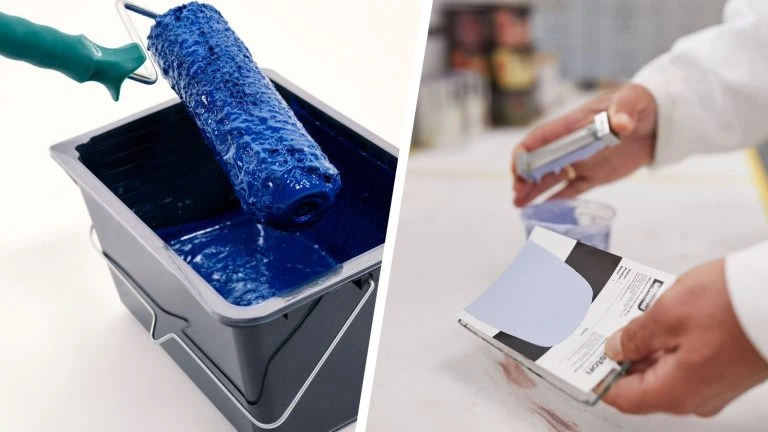
Wall paint with 85% renewable raw materials, without primary microplastics
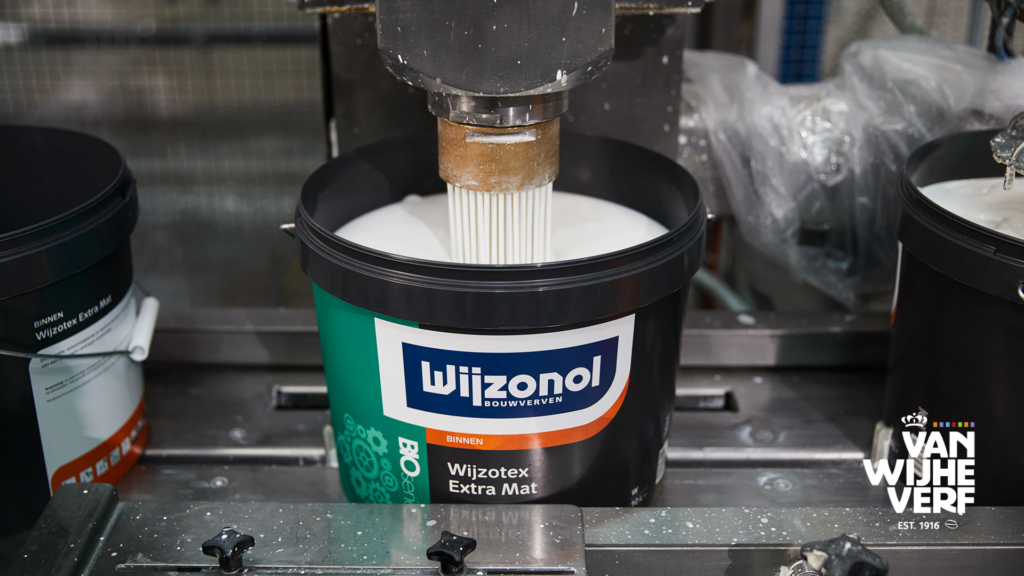
The new, sustainable wall paint is being launched both nationally and internationally. In the Netherlands it is marketed under the name Wijzotex Zyra Mat, and in Europe under the name Ralston Zora Matt. Previously, we introduced a concept interior wall paint with a fossil‑free raw‑material base of 99 percent (Flower Power), without microplastics, and a high‑gloss exterior lacquer of which 70 percent of the raw materials originate from renewable, biobased sources (BIOmotion70). These so‑called concept paints are formulations that are still in a further development phase before they can be applied on a larger scale and commercially introduced. The wall paints Zyra and Zora are now commercially available
Continuously searching for sustainable alternatives
“We develop paint and have been working for years to make our paints increasingly sustainable and less harmful to the environment. One of our development lab technicians has been specifically dedicated to constantly searching for sustainable alternatives in the composition of our paints. Zyra and Zora were developed based on knowledge and experiences from other technologies. Through the concept paints process in our innovation laboratory WYDO NBD in Groningen, we already had a great deal of experience and achieved results with an increasingly higher biobased content. Experiences with other developed technologies also contribute to achieving faster results. With this new wall paint, our goal was to add fewer microplastics. In the end, we succeeded in adding no primary microplastics at all. During development, the product was launched as a pilot in the market and used for various painting projects. The result is a market-ready product that once again exceeds expectations.”
Plant-based raw materials for the circular economy
Biobased paint contains raw materials of natural origin. These are materials derived from renewable sources instead of fossil resources such as oil. They are produced from plants, trees, crops, algae or organic waste. The most important characteristic is that they are renewable and contribute to a circular economy. The materials come from inexhaustible sources and can regrow within the lifespan of the paint.
With our formula, we achieve a biobased content of 85 percent, whereas until recently, the maximum in our sector was 50 percent. Some raw materials, such as pigments, certain additives and auxiliaries, are not yet fully available biobased. That explains the remaining 15 percent. Ultimately, we are working towards 100 percent biobased. This requires endless testing, adjustments and a deep molecular understanding. We work closely with our suppliers, preferably from the Netherlands or Europe. Our openness about the technical challenges demonstrates that this paint is not just a marketing story, but the result of pure scientific passion and the courage to think outside the box.
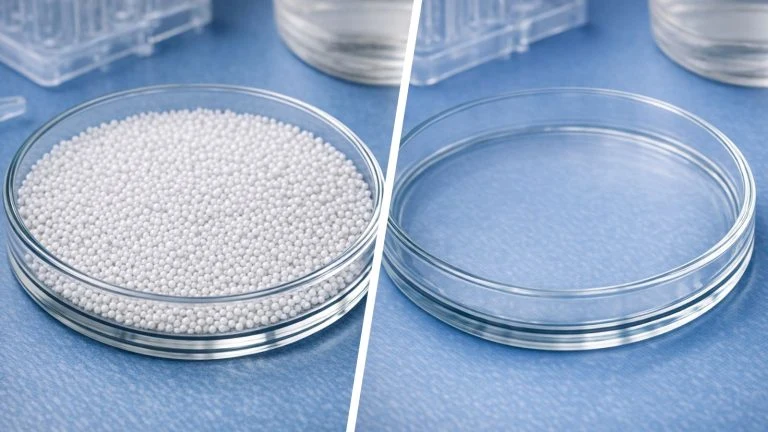
Free from primary microplastics
Microplastics are small plastic particles, less than 5 millimeters in size. They persist in the environment for a long time. Studies have shown that microplastics accumulate everywhere: on the highest mountains, in the deepest ocean trenches, and in the most remote polar regions. Researchers have also found microplastics in the human body: in heart tissue, the liver, kidneys, breast milk, and the bloodstream. For over a century, tiny plastic particles have entered the environment. They endure for a long time. That is why we find them in the body tissues and blood of animals throughout the entire food chain—including ourselves—and in many things we consume, such as salt, beer, and drinking water. Our Laboratory Manager Eric Deen says about this: ‘Although science has not yet reached a clear conclusion about the harmful effects in the short and long term, it is crystal clear to us that we must and want to reduce the proportion of microplastics in our paints to zero. We are proud that we have succeeded in not adding any primary microplastics to this new wall paint. If ongoing research shows that our latest wall paint is biodegradable, then there will also be no secondary microplastics left behind, such as those that can be released through decay, damage, wear, or treatment of an old layer of paint. In that case, we may speak of truly microplastic-free paint.’
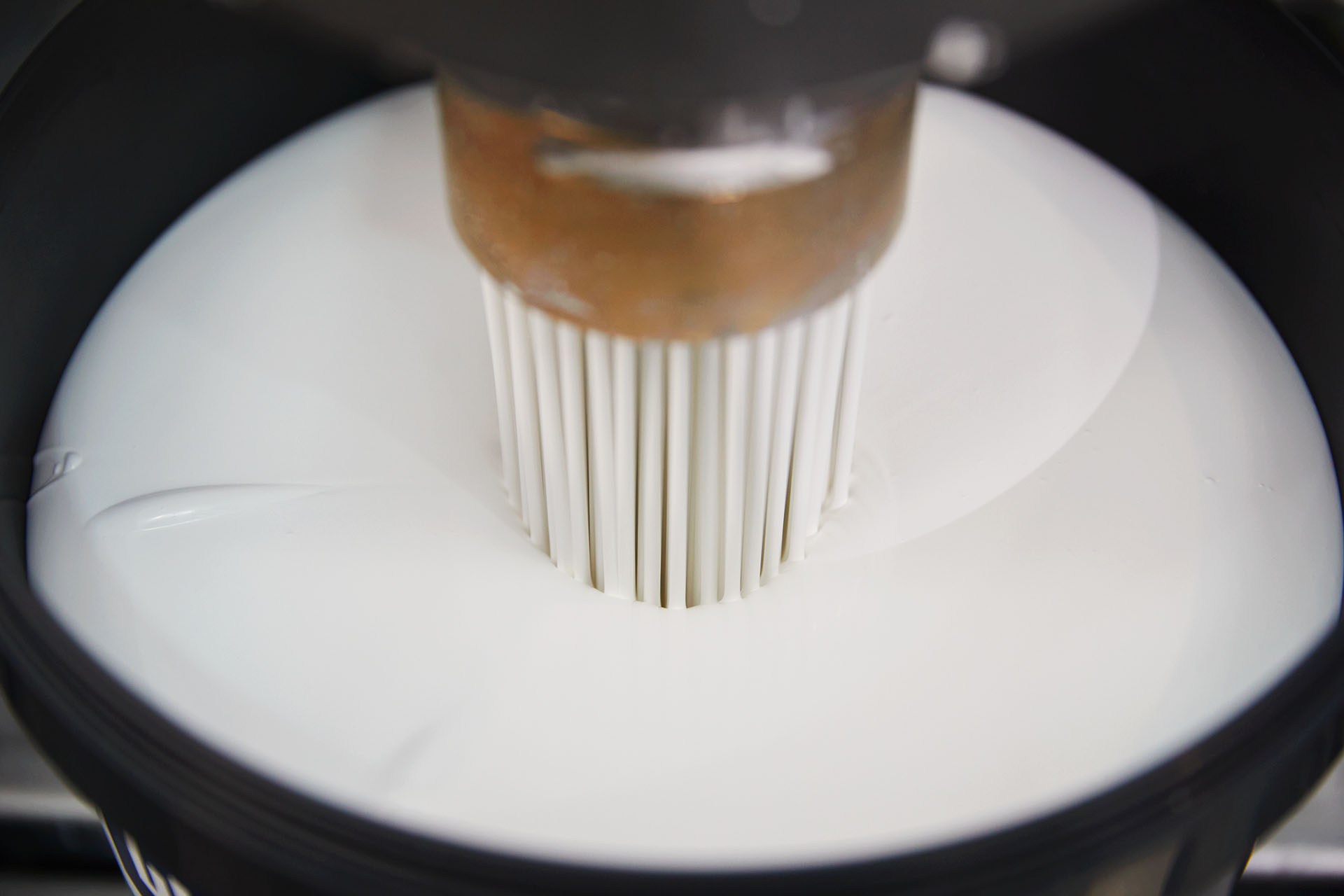
Superior smooth wall paint
It is the combination of the high biobased content and the absence of primary microplastics that makes this new wall paint unique. A prerequisite during development was—and remains—that the paint must offer the same professional quality and workability for professional painters, clients, and partners in the property maintenance chain.
Ralston Zora Mat
- 85% Biobased materials
- 0% primary microplastics
- Economical in use
- Sustainable choice
- Matt
- Long colour retention
- Available in all colours available


The eight sustainability pillars at Van Wijhe Verf
The introduction of these wall paints is not just another product; it is a direct result of our comprehensive sustainability strategy.
This strategy revolves around eight clear pillars that guide every development within the company. Three important strategic pillars are addressed by this paint: reducing the CO2 footprint, human well-being, and renewable raw materials. From this perspective, sustainability is not seen as a limitation, but as an opportunity to accelerate innovation.
We are taking the lead. We learn from the process and from the journey toward it. Ultimately, our ambition is to achieve 100 percent circularity in our products and our production process. We are also on our way to a zero CO2 footprint. As a B Corp organization, we aim to create benefits for people and planet.
Collaboration accelerates progress
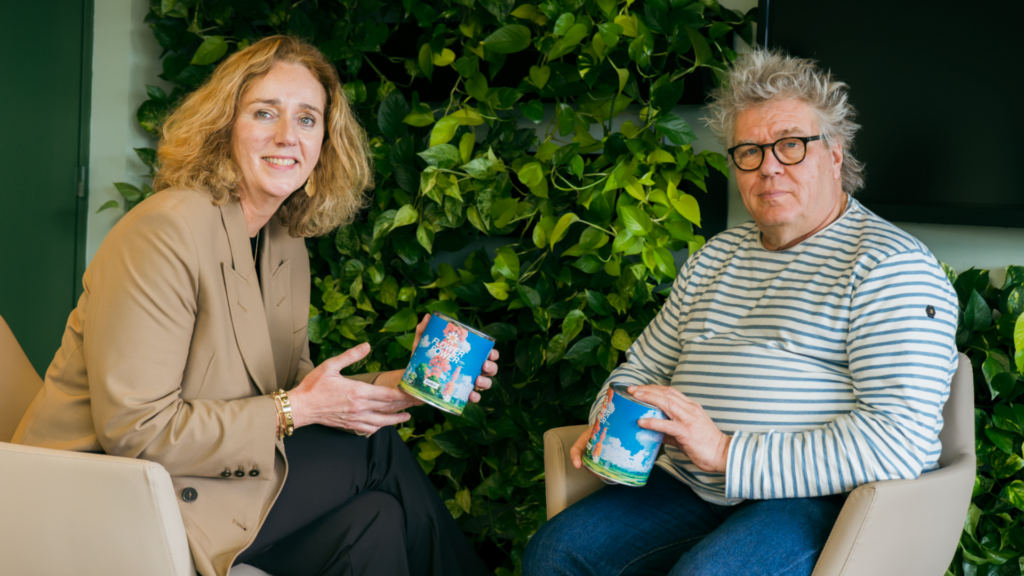
Marlies van Wijhe, CEO of Royal Van Wijhe Verf, on the importance of collaboration within the value chain: “The greatest challenge lies in developing alternative raw materials and additives. Suppliers and other chain partners are extremely important to us in this respect. With this new wall paint, as well as with our concept paints, we show that we are on our way. To engage suppliers of raw materials and to strengthen each other. To set something in motion.We invite individuals or parties who are engaged in innovation or who wish to contribute in any way to join us. Together we can go further.
We are enthusiastic about a sustainable and climate‑neutral future. That is why we gladly share what we do in the laboratory to make this a reality. Independent, experimental, and continuing on achieved results—together with our chain partners. The future is now.”